The Aviators logo Apply now →
← Aviation Programs

Aviation program

Aviation Science Program

Aviation concepts taught as an extension of science, technology and engineering.

Enquire now →
Aviation Science Program
DURATIONSchool-year enrichment program
ELIGIBILITYSchool students
OUTCOMESchool certificate / participation record

Program overview

What students can expect

Aviation concepts taught as an extension of science, technology and engineering.

Program highlights

Course Progression Runway

How Students Advance In
short_title ?: $program->title); ?>.

A structured instructional roadmap ensuring comprehensive conceptual understanding and practical mastery.

Term 01 Foundational Stage
0%

Core Fundamentals

Introduction to core subject principles, safety guidelines, and essential terminologies.
  • Foundational concepts
  • Laboratory orientation
  • Initial diagnostic check
Term 02 Applied Stage
0%

Hands-on Practicals

Active laboratory exercises, simulation drills, and problem-solving assignments.

  • Simulation / lab experiments
  • Group collaborative projects
  • Mid-term assessment
Term 03 Advanced Stage
0%

Mastery & Synthesis

Complex problem sets, project presentations, and intensive examination preparation.

  • Past-paper question banks
  • Project dossier creation
  • Mock evaluation
Term 04 Completion
0%

Certification & Output

Final examinations, portfolio review, and formal accreditation delivery.

  • Recognized qualification
  • Academic transcript report
  • Next pathway advisory

Curriculum Structure

Term-by-term syllabus breakdown

MODULE 01 · WEEKS 1–12

Principles & Fundamentals

  • Introduction to primary theoretical concepts and vocabulary.
  • Standard operating procedures, safety rules, and equipment care.
  • Weekly structured reading, calculations, and formative quizzes.
MODULE 02 · WEEKS 13–24

Applied Lab & Simulation

  • Empirical testing, flight simulator hours, and scientific reporting.
  • Collaborative case studies and multi-variable problem solving.
  • Mid-year assessment and one-on-one progress review.
MODULE 03 · WEEKS 25–36

Mastery, Examination & Wings

  • Past-paper timed sessions and rigorous marking rubric mastery.
  • Final capstone model project or examination board entry.
  • Progression counseling and transcript dossier completion.
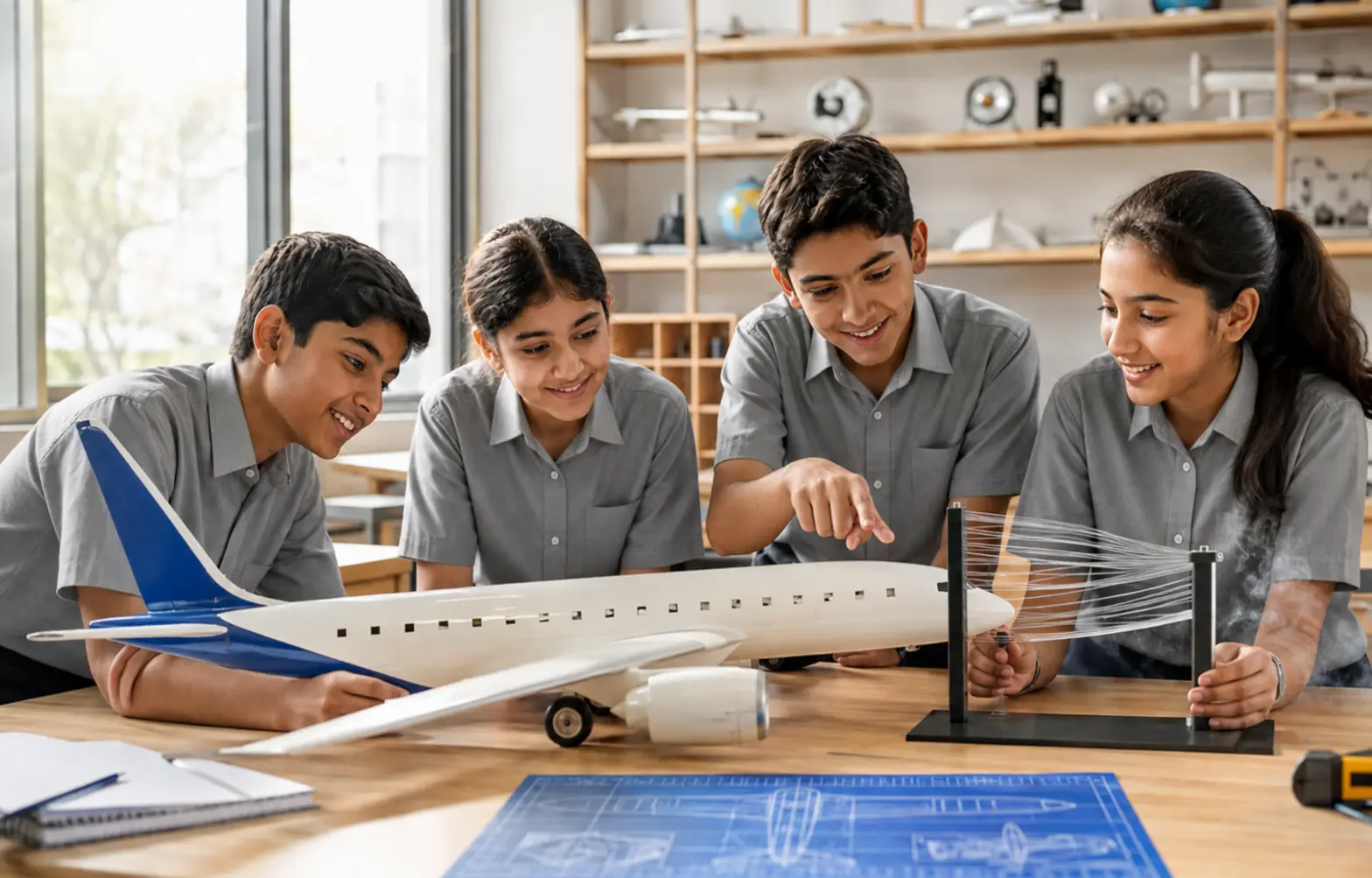
Students learning aviation principles
06+Start early

Principles first

Aviation Science starts with purposeful understanding.

From Grade 6 onward, learners can begin with age-appropriate concepts, language and systems relevant to aviation.

Clear explanations establish an early foundation before students move into demonstrations, simulation or practical work.

  • Essential concepts
  • Aviation vocabulary
  • Guided preparation
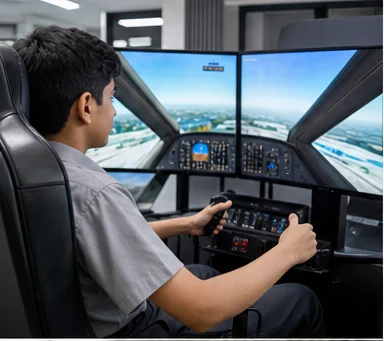
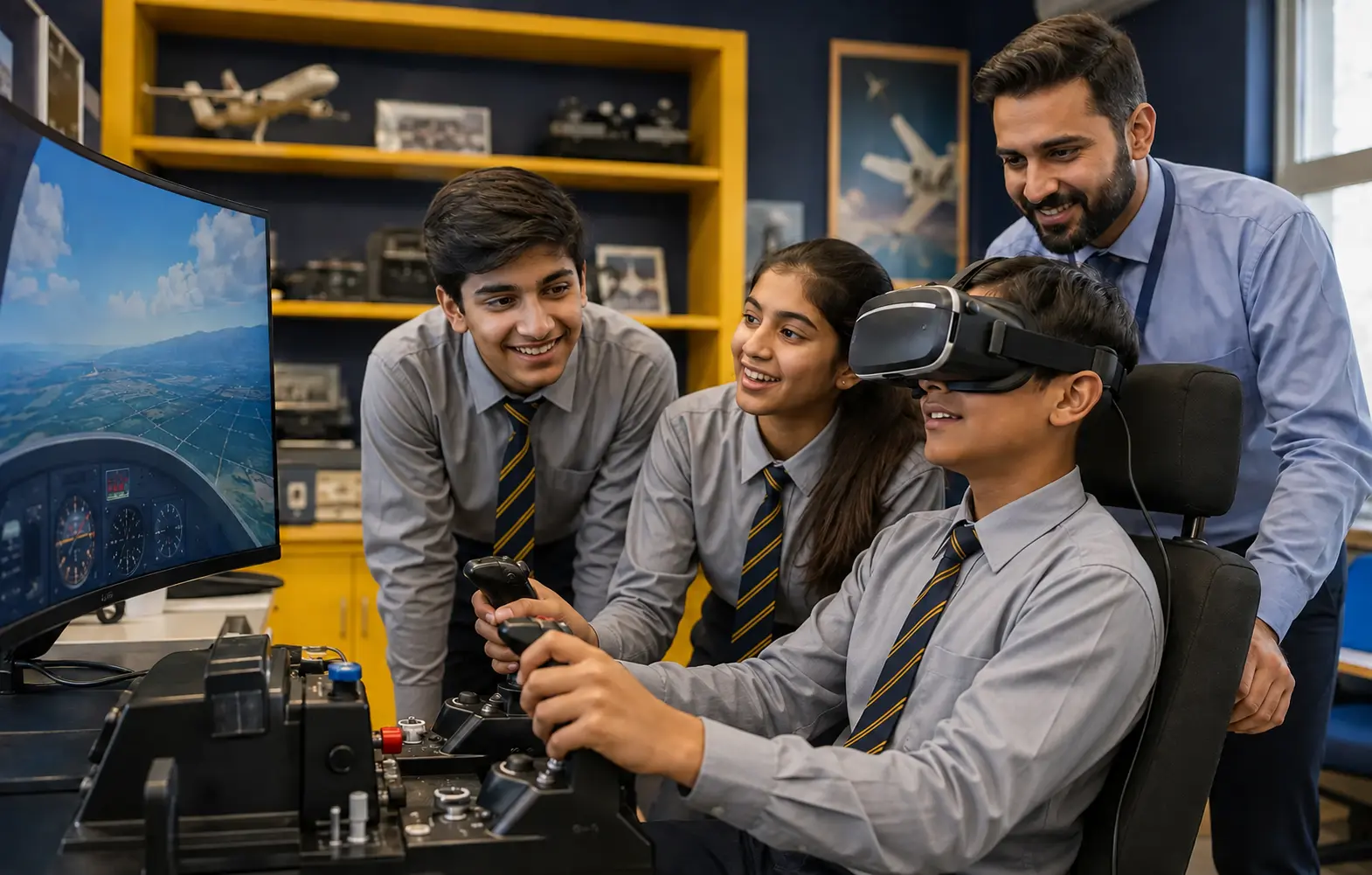
Virtual-reality aviation learning experience
02Experience

Practical experience

Learning becomes memorable through application.

Activities may involve simulation, models, structured observation, problem-solving or supervised practice depending on the program.

Students connect what they see and do with the principles introduced by the instructor.

  • Demonstration
  • Supervised practice
  • Reflection
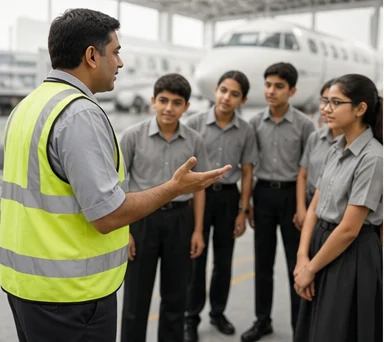
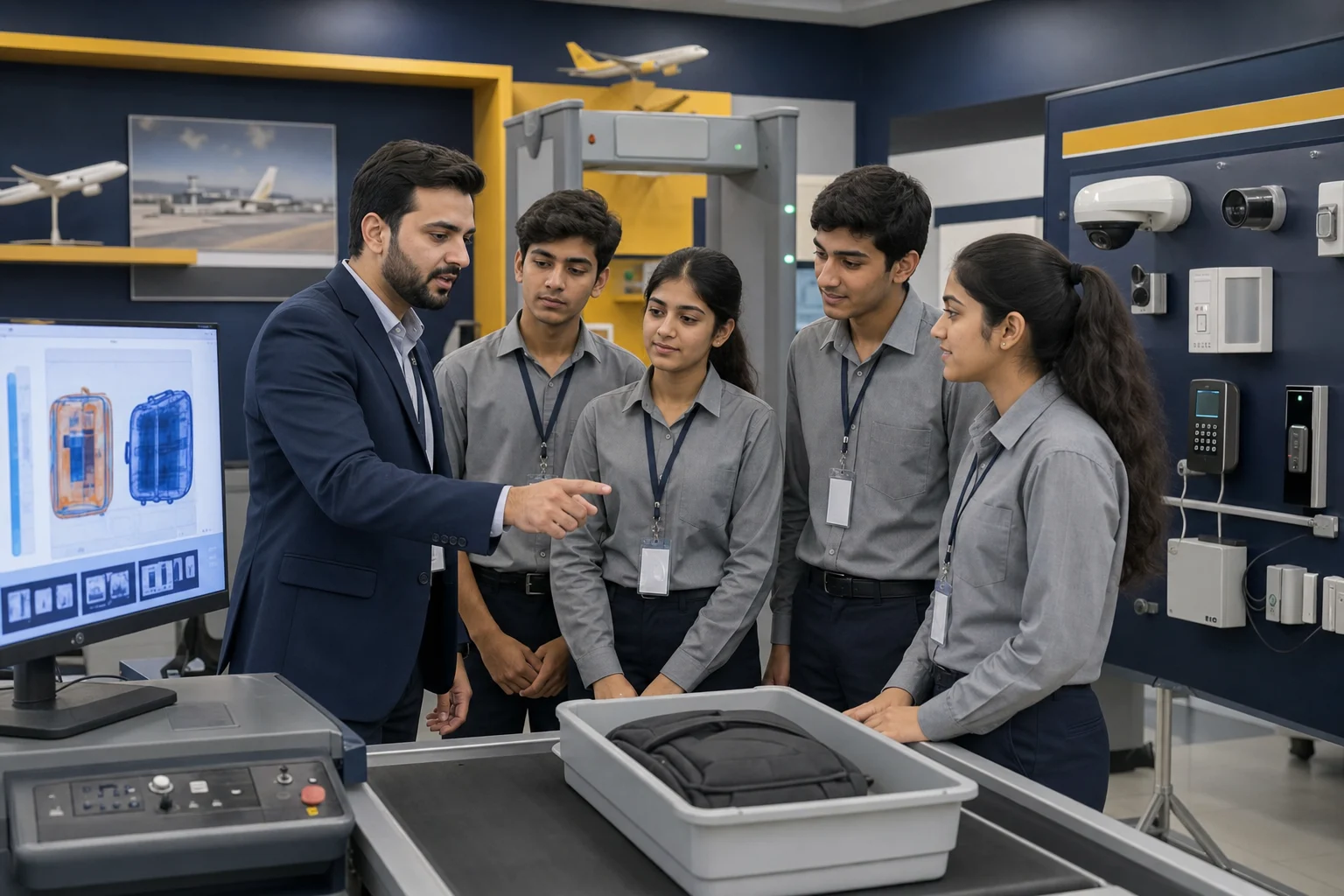
Airport safety and security learning
SAFEResponsibility

Safety culture

Good aviation habits begin with discipline.

Following instructions, checking equipment, understanding limits and communicating clearly are treated as essential behaviors.

The level of practical participation remains appropriate to the program, equipment, learner and learning environment.

  • Briefing and checks
  • Responsible participation
  • Clear communication
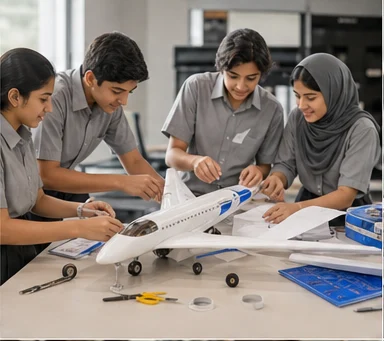
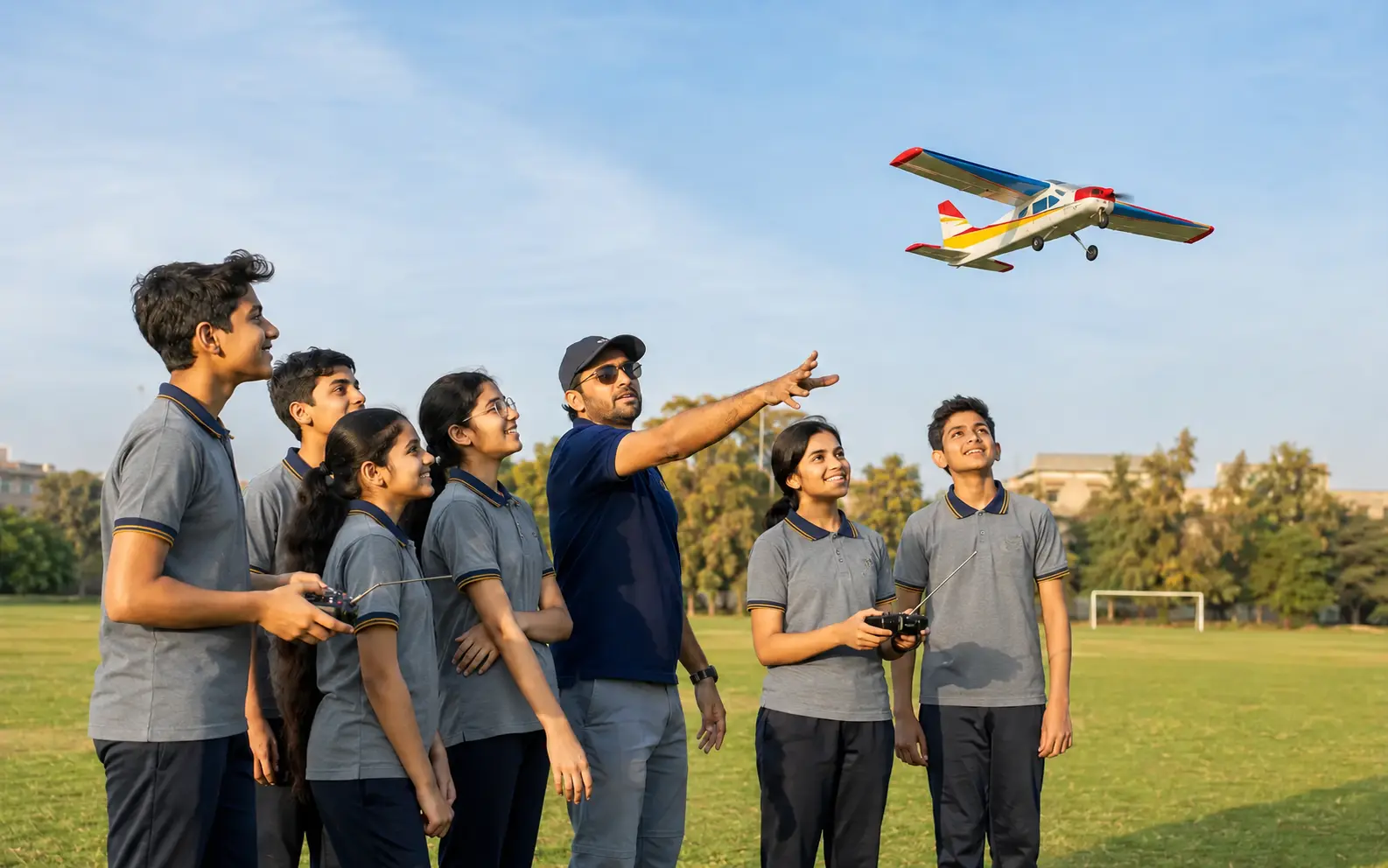
Students collaborating with remote-control aircraft
03Collaborate

Technical teamwork

Complex challenges are rarely solved alone.

Aviation activities encourage students to share observations, divide tasks and explain decisions to others.

Problem-solving becomes stronger when learners listen carefully, record evidence and improve a plan together.

  • Team roles
  • Problem-solving
  • Evidence-based decisions
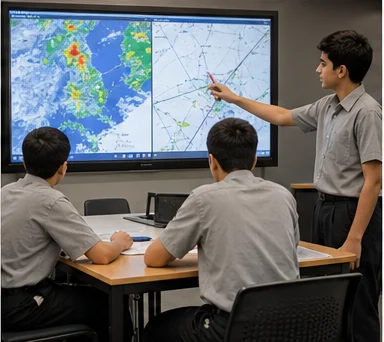
Students exploring future aviation pathways
NEXTExplore

Future awareness

A broader view of aviation pathways.

The program helps learners understand where the topic sits within the wider aviation, technology or safety landscape.

Completion outcomes, eligibility and possible next steps are shown in the program facts and can be discussed with the admissions team.

  • Program outcome
  • Further learning
  • Career awareness

Ask about this program

Interested in Aviation Science?

Leave parent or guardian contact details and the admissions team will get back to you.

Affordable pathways · Grade 6 onward

Build the mindset early.

Talk to our team about published prices, academic progression and the right age-appropriate aviation experiences for your child.

Speak to admissions →
WAChat with us